
Home
/
Rebates and programs
/
For businesses and organizations
/
Commercial vehicle usage data
/
Class 4 delivery van project
Class 4 delivery van project
Introduction
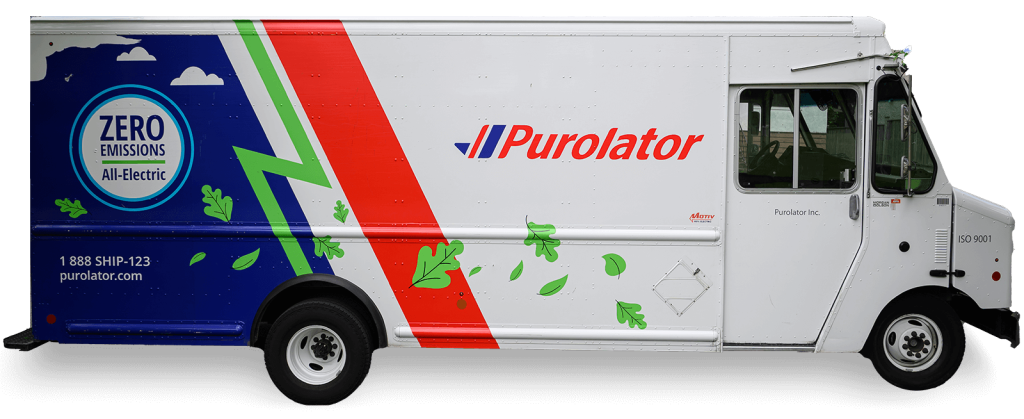
The Class 4 delivery van project used battery-electric vans for last-mile package delivery in B.C.
Purolator is the second to complete a full year of data collection, surveys and interviews.
The Commercial Vehicle Pilots program supported this project with buying 13 vehicles and installing 13 Level 2 charging stations.
Total funding: $410,370.81
Project summary and data package
Project overview
This project included Two Ford E-450 internal combustion engine (ICE) vehicles. They were included in data collection to compare emissions and energy costs.
Fleet details
Size: 13 vehicles
Vehicle class: 4
Make: Motiv
Model: Epic-4
Use case: Package delivery
Vehicle details
Range: 240 km
Powertrain: Battery electric
Weight rating: 22,000 lbs
Capacity rating: 5,000 lbs
Timeline and location
When: April 2024 to April 2025
Where: B.C. Mainland/ Southwest
Key findings
Emissions and cost savings
- Avoided 86,095 kg of CO2 from operations
- Averaged 10 g of CO2 emissions per kilometer
- Saved $59,539 on the cost of fuel
Operation and performance
- Averaged 53.1 km daily distance driven
- 125,363 km driven
- 163.6 km was the largest distance travelled in a day
- Averaged 170.2 km calculated range
- Average speed of 16.6 km/h
- Averaged 2.4 hours daily drive time
- 0.1 percent of full charge days ending with less than 10 percent state of charge (SoC)
Charging and energy
- Start of day SoC averaged 71 percent
- End of day SoC averaged 94 percent
- Averaged 4.3 hours of daily charge time
- Averaged 31 kWh of daily charged energy
- 57.5 kWh/100 km of energy consumed while driving
- 66.7 kWh/100 km of energy consumed while driving and idling
- Overall energy consumption was 68.1 kWh/100 km
- 11.7 kWh/100 km of energy regeneration while driving
What they learned about using ZEVs
They learned that:
- Energy costs were 6x cheaper than their equivalent internal combustion engine (ICE) vehicles
- Drivers liked the benefits of using a zero-emission vehicle
- Drivers needed training to ensure a smooth transition
- Range in the real world can be less than what the manufacturer states
- Cold weather can have a significant impact on range
- An increase in payload can reduce range
- They largest issue they had was with uptime. The vehicles were down for a variety of reasons
- Maintain relationships with manufacturers so you can address issues as fast as possible
- Planning is important to ensure charging reliability
Purolator continues their plan to invest in ZEVs for last-mile package delivery.